
 Add GTC Bharat on Google
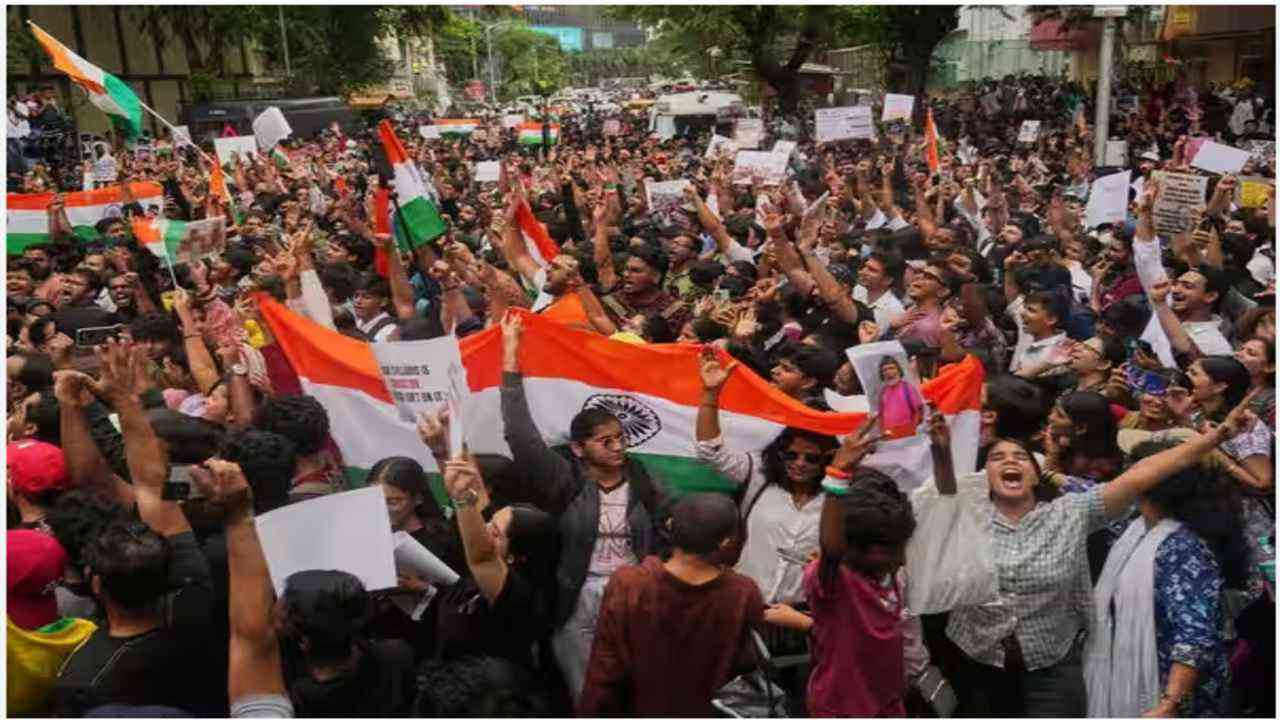
July 25, 2026, will be remembered as the day the "invincibility" of the current administration finally shattered under the weight of a generation it dared to dismiss. With the resignation of Union Education Minister Dharmendra Pradhan this morning, the Cockroach Janta Party (CJP) has achieved what many thought was impossible: forcing a major structural climbdown from a government that has historically prided itself on never blinking first. This is only the second time in over a decade that the Modi government has been forced into a total retreat. The first was the year-long Kisan Andolan (2020-21). The second is this: the "Cockroach Revolution": a movement that lasted barely two months but fundamentally rewired the mechanics of Indian dissent.
The Spark: 2 Million Futures and a Single Insult
The roots of this earthquake lie in the catastrophic NEET-UG paper leak of May 2026. When it was revealed that the dreams of over 2 million students had been auctioned off to the highest bidders in Rajasthan and beyond, the initial response from the establishment was silence.
But the silence was broken not by an apology, but by an insult. During a preliminary hearing on the leak, Supreme Court Justice Surya Kant, while discussing the impact of unemployment and exam delays, reportedly referred to the protesting youth as "cockroaches crawling on the streets of Delhi, cluttering the legal system."
It was meant to be a dismissal. Instead, it became a battle cry.
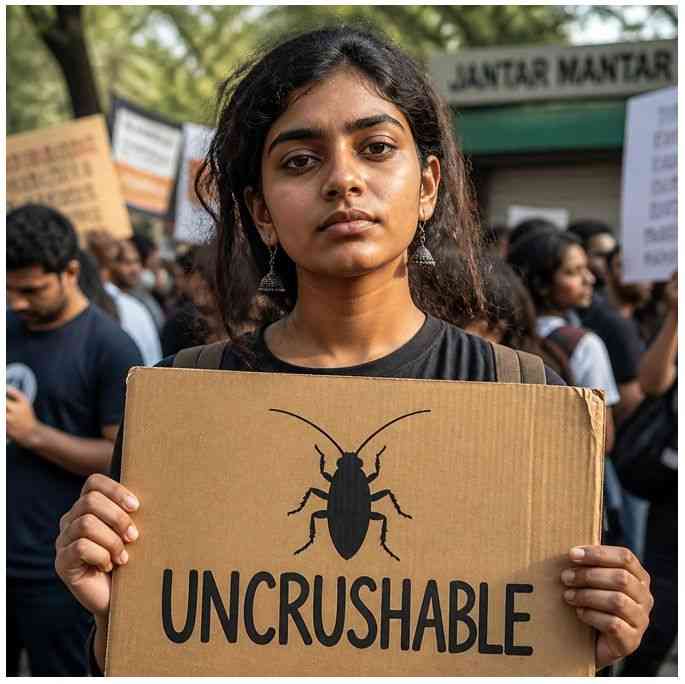
Abhijeet Dipke, a Boston University graduate with a flair for digital satire, seized on the remark. He founded the Cockroach Janta Party (CJP) within 48 hours. "If they think we are cockroaches," Dipke famously tweeted, "then we will show them that cockroaches are the only things that survive a nuclear blast. We are uncrushable."
The Siege of Jantar Mantar
What began as a digital meme quickly manifested into physical presence. On June 6, 2026, the first wave of students arrived at Jantar Mantar. They didn't come with the banners of political parties; they came with their admit cards, their textbooks, and their cockroach-themed posters.
For 26 days, they sat. The government’s strategy was classic: ignore, wait for the heat to disperse, and label the organizers. Dharmendra Pradhan himself initially dismissed the CJP as a "B-team of terror groups" and "misguided urban youth."
The movement took a turn for the historic when Sonam Wangchuk, the renowned education reformist and activist, joined the protest. His decision to begin an indefinite hunger strike added a layer of moral gravity that the government couldn't dismiss as "youthful exuberance." Wangchuk, looking frail but resolute, became the conscience of the movement.
July 20: The Crackdown That Backfired
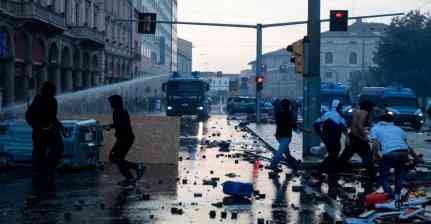
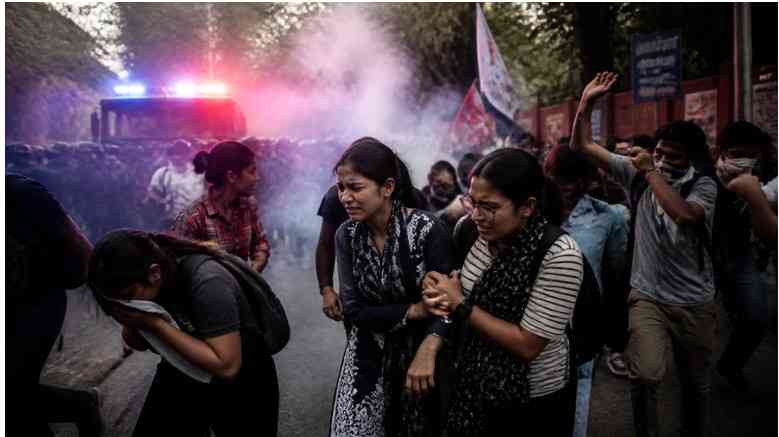
The turning point was the night of July 20. As students began a peaceful march toward Parliament to submit a memorandum, the Delhi Police launched a massive crackdown. The scenes were visceral: tear gas canisters raining down on students holding candles, lathicharges that left over 150 students injured, and reports of pellet guns being used in the national capital.
But in 2026, the revolution is not just televised; it is live-streamed.
The images of blood-stained admit cards and students helping each other through clouds of smoke went viral instantly. By the next morning, the protest was no longer confined to Jantar Mantar. Spontaneous demonstrations erupted in Mumbai’s Azad Maidan, Bengaluru’s Freedom Park, and the streets of Hyderabad, Patna, and Ahmedabad.
Even the cultural elite, usually silent on such matters, broke ranks. Salman Khan’s tweet of support for "the kids who just want a fair shot" was shared millions of times. The Delhi High Court, sensing the national mood, issued scathing notices to the Centre and the NHRC, questioning the "disproportionate use of force against unarmed examinees."
Why This Movement Succeeded
To understand why the Modi government bowed today, we have to look at why this movement was different from anything we’ve seen in the last five years.
1. Universal Relatability: Every middle-class family in India, regardless of political leanings, has a stake in the exam system. When you mess with NEET, you mess with the retirement plans of millions of parents and the life goals of millions of children.
2. Digital Mastery: Gen Z didn't just use social media; they weaponized it. They bypassed traditional media gatekeepers. While news channels were debating the "intent" of the protesters, TikTok and Instagram reels were showing the "reality" of the paper leaks.
3. Ownership of the Insult: By embracing the "cockroach" label, the CJP stripped the establishment of its power to dehumanize them. They turned a slur into a badge of honor, creating an identity that was impossible to break.
4. Discipline and Non-Violence: Despite the extreme provocation on July 20, the CJP leadership: Dipke and others: repeatedly called for peace. They isolated bad actors and focused on a single demand: accountability.
5. The Martyr Factor: Sonam Wangchuk’s deteriorating health on the 15th day of his fast created a ticking clock that the government could not ignore. The prospect of a national hero dying on the streets of Delhi was a political risk too great to take.
The Political Shift: A New Era of Accountability
The resignation of Dharmendra Pradhan is more than just a cabinet reshuffle. It is a signal that the BJP's "aura of invincibility": already dented after the 2024 General Elections: has sustained a structural crack.
For the first time, the government's initial response (fast-track courts and promises of "future reforms") was rejected by the public as "too little, too late." The demand was for heads to roll, and today, one did.
For the future of Indian politics, this means:
• The Youth Vote is a Monolith: Political parties can no longer assume that young voters will be distracted by identity politics. Issues of "bread and butter": exams, jobs, and transparency: are now the primary drivers of mobilization.
• A Template for the Opposition: While Rahul Gandhi, Arvind Kejriwal, and Sharad Pawar eventually joined the protests, they were followers, not leaders. The CJP has shown the opposition that a non-partisan, issue-based movement can achieve more than traditional political rallies.
• The Power of Resilience: The "Cockroach Revolution" has restored the faith of young Indians in the power of the street. After years of feeling that their voices didn't matter, they have proven that even the most powerful government must eventually answer to the people.
A Hopeful Note for Democracy The CJP’s decision to call off the protests following the resignation and the announcement of a new, foolproof Exam Transparency Act shows a remarkable level of maturity. This wasn't about anarchy or bringing down a government; it was about fixing a broken system and demanding accountability. As the students pack their bags at Jantar Mantar today, they aren't just going home to study for their re-exams. They are going home as the architects of a new political reality. The cockroach, it turns out, was never a pest. It was a survivor. And in 2026, the survivors have finally taken charge of their own story.